
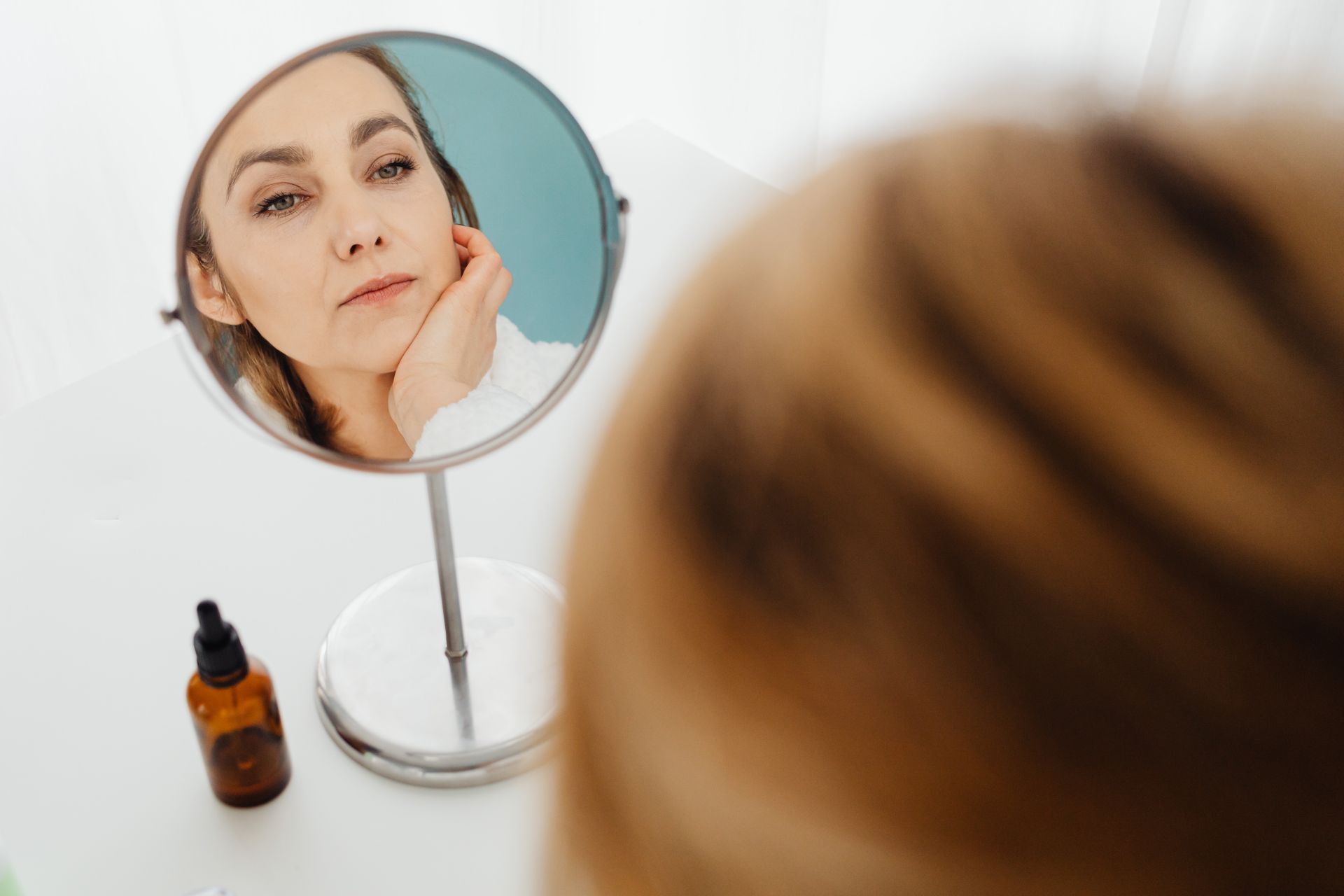
Losing weight often brings important health benefits and can boost confidence. Still, some people are surprised that after reaching their goal weight, their face and neck might not look the way they expected.
It’s common to notice changes such as a more hollowed look, looser skin, or loose skin under the chin. Sometimes these changes can make people feel older, even after losing weight.
This happens because weight loss affects more than just your weight. It can also change the amount of fat in your face, the support your skin has, and the shape of your features. Knowing why these changes happen can help you explore your treatment options.
Weight Loss in the Face and Neck
Fat in the face helps create youthful shapes and smooth transitions. When you lose weight, fat decreases all over your body, including in your face and neck.
Aging also affects collagen, elastin, and the structures that support your skin. As these change, your skin may not tighten up as well after you lose a lot of weight.
For some patients, the result is a leaner and more defined appearance. For others, volume loss and skin laxity become more noticeable, particularly in the lower face and neck.
The degree of change often relies on factors such as:
- Age
- Genetics
- Skin elasticity
- Amount of weight lost
- Speed of weight loss
- Overall skin quality
Everyone’s experience is different, so treatment recommendations are tailored to each person.
Volume Loss vs Loose Skin: Understanding the Difference
A common misconception is that loose skin is always the main issue after weight loss.
In fact, some people notice volume loss instead of extra skin.
Volume loss occurs when facial fat diminishes, leading to a hollow or sunken look. You might see changes in your cheeks, temples, under your eyes, or around your mouth.
Loose skin occurs when skin remains stretched after fat is lost. This can cause sagging under the jaw, around the neck, or along the lower face.
Many people have both volume loss and loose skin. That’s why treatment plans are often personalized rather than relying on a single approach.
Common Facial and Neck Changes After Significant Weight Loss
Weight loss can change different parts of your face and neck in different ways.
Some people see more facial definition and shape. Others start to notice age-related changes that weren’t as obvious before.
Common concerns include:
Hollow Cheeks
Less facial fat can make your cheeks look flatter or less full than before.
More Prominent Jowls
When facial volume goes down, sagging along the jawline can become more noticeable.
Loose Skin Under the Chin
The area under the chin is especially likely to have loose skin after weight loss. Some people call this a “turkey neck” or notice more fullness there, even after losing weight.
Neck Skin Laxity
The neck often reveals signs of aging earlier than other areas of the face. Weight loss may make existing laxity more visible, particularly in patients with reduced skin elasticity.
Changes in Facial Balance
Losing facial volume and sagging can change the balance of your face, making some features stand out more than before.
When Non-Surgical Treatments May Help
Not everyone needs surgery to address changes in their face or neck after weight loss.
If you have mild loose skin and your skin is still fairly elastic, non-surgical treatments might help a lot.
Treatments like Renuvion and other radiofrequency devices boost collagen in your skin. As new collagen forms, you may notice better skin quality and some tightening.
These treatments are often most effective when:
- Skin laxity is mild
- Excess skin is minimal
- Skin quality remains relatively strong
- Patients prefer less downtime
- Expectations are realistic
Non-surgical treatments can make your skin firmer and smoother, but they can’t remove extra skin that’s already there.
When Surgery May Be the Better Option
For some patients, loose skin treatment options involving collagen stimulation alone may not provide the level of correction they are seeking.
When significant skin laxity is present, surgery may offer a more effective solution.
This is often true when patients experience:
- Hanging skin beneath the chin
- Pronounced neck laxity
- Significant jowling
- Noticeable tissue descent
- Excess skin folds
Procedures such as a facelift or neck lift can directly treat these concerns by repositioning tissues and removing excess skin.
Unlike non-surgical treatments, surgery can physically eliminate redundant tissue rather than relying solely on collagen stimulation.
This does not mean surgery is necessary for everyone. The best approach depends on the degree of skin laxity and the individual patient’s goals.
Can Surgical and Non-Surgical Treatments Be Combined?
Many patients assume treatment must be either surgical or non-surgical. In reality, combination treatment plans are common.
Surgical procedures address structural concerns such as excess skin and tissue descent. Non-surgical treatments can then be used to support skin quality and maintain results over time.
For example, a patient may undergo a neck lift to remove excess skin and later use Morpheus8 to improve skin texture and firmness.
Similarly, facial rejuvenation plans may combine surgical correction with collagen-stimulating treatments to address multiple aspects of aging.
Because facial aging is often multifactorial, a combination approach may provide the most comprehensive result for some patients.
FAQs
Does losing weight make your face age faster?
Weight loss does not directly accelerate aging. However, it may reveal age-related volume loss and skin laxity that were less noticeable before weight loss.
Why do I have loose skin under my chin after weight loss?
As fat decreases beneath the chin, stretched skin may not fully contract. This is more common in patients with reduced skin elasticity or significant weight loss.
Can Renuvion tighten loose skin after weight loss?
Renuvion can improve mild skin laxity by stimulating collagen production. However, it cannot remove substantial excess skin.
Will loose skin improve on its own?
Some improvement may occur over time, particularly in younger patients with good skin elasticity. However, significant excess skin often does not resolve completely without intervention.
Schedule Your Consultation at ICLS
Weight loss might cause notable changes in the face and neck, but those changes are not the same for everyone. Some patients primarily experience volume loss, while others develop skin laxity, tissue descent, or a combination of concerns.
Because treatment recommendations depend on anatomy rather than trends or assumptions, an individualized evaluation is the best way to determine which options may be appropriate.
Schedule a consultation with ICLS to discuss your concerns and determine whether non-surgical treatment, surgery, or a combination approach best matches your goals.